
The Bali hidden gems worth seeking out are seldom secret; they are simply quiet at the right hour. Near Jimbaran, that means a village temple between ceremonies, the calm southern end of the bay at Muaya and cliff coves reached on foot; further afield, Munduk, Sidemen and Amed are worth two or three nights of their own.
Balquisse Heritage Hotel is our home in Jimbaran, set in its gardens about 400 metres back from the beach. That gives us an interest in where you stay, and we would rather say so plainly.
Bali is not short of admirers. Many arrive with the same few famous views in mind, and a spot called hidden online can have a queue for photographs by the next day.
That is worth remembering.
Finding a quieter Bali is less about secret places and more about timing, effort and respect for how a place is used. Some of the most rewarding corners are working places, such as a market or a village temple, which are quiet because they were never built for visitors. Others are well-established places that most itineraries simply pass by. The rest are coves and viewpoints that need stairs, a tide table or a long drive, which is exactly why fewer people go.
No one can promise solitude. "Quiet" here means quiet compared with the famous names, on an ordinary weekday, at the times suggested.
Our own village is the easiest place to start, and the earliest. At the crossroads in the middle of Jimbaran village, Pura Ulun Siwi faces the morning market across the road. This village temple is unusual in facing east. Accounts of its age differ. Some date the present structure to the eighteenth century, while local manuscripts link the sacred site to a much earlier time. On ordinary mornings it is quiet. On holy days it fills with offerings and worshippers, and the road outside may close for several hours.
It is a place of worship first, and a sight second. Bring a sarong and sash, dress modestly at sacred sites, follow the temple custodians' lead and step back when a ceremony begins. Afterwards, cross to the market while the flower and produce stalls are still busy.
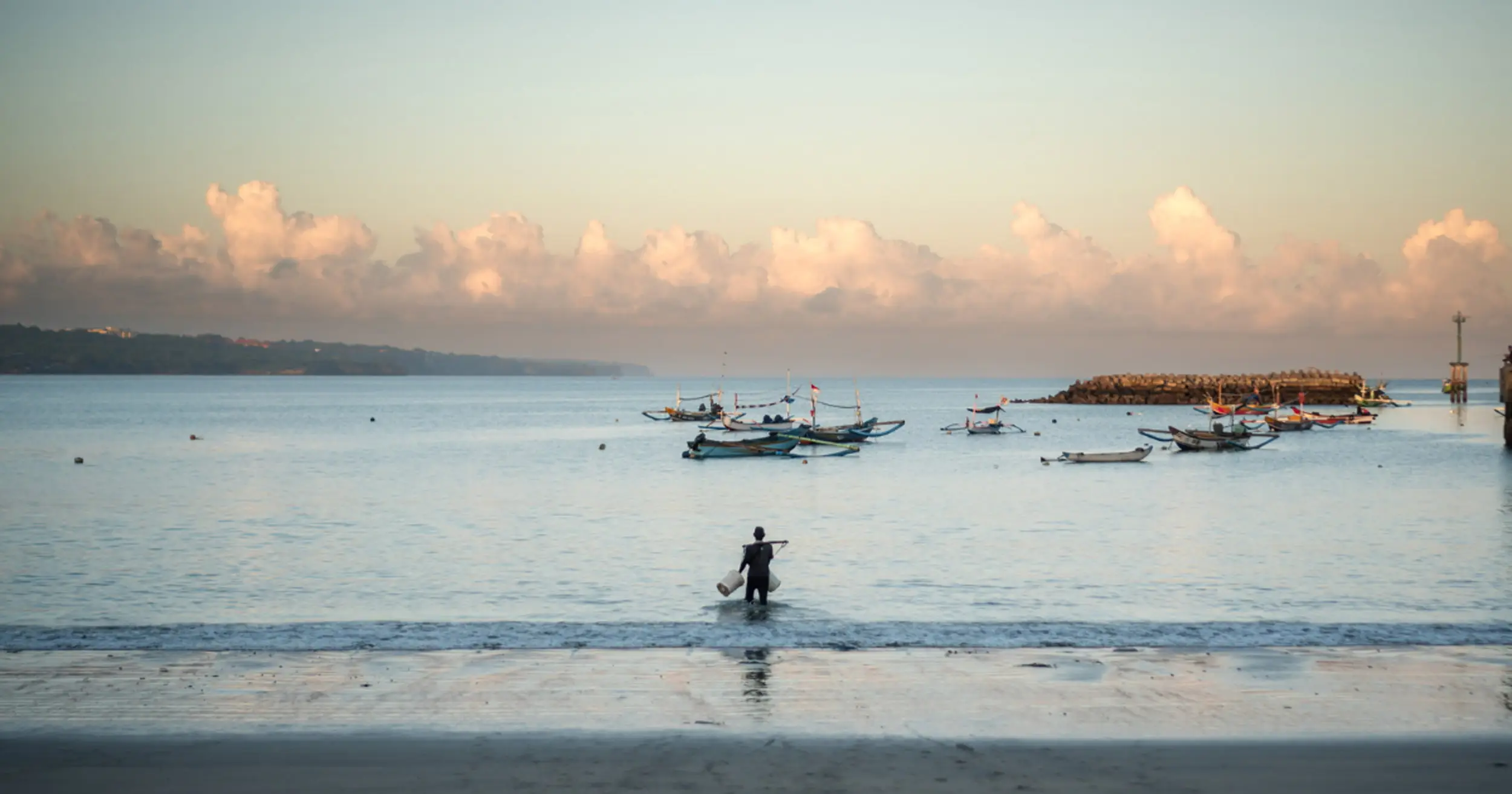
Then walk down to the bay and turn south. Jimbaran's beach curves from Kedonganan down to Muaya, and the southern end is often described as the calmest part of the bay. Beginners can find a gentle wave there at mid-tide, though there is reef along part of the southern edge. It suits an early walk.
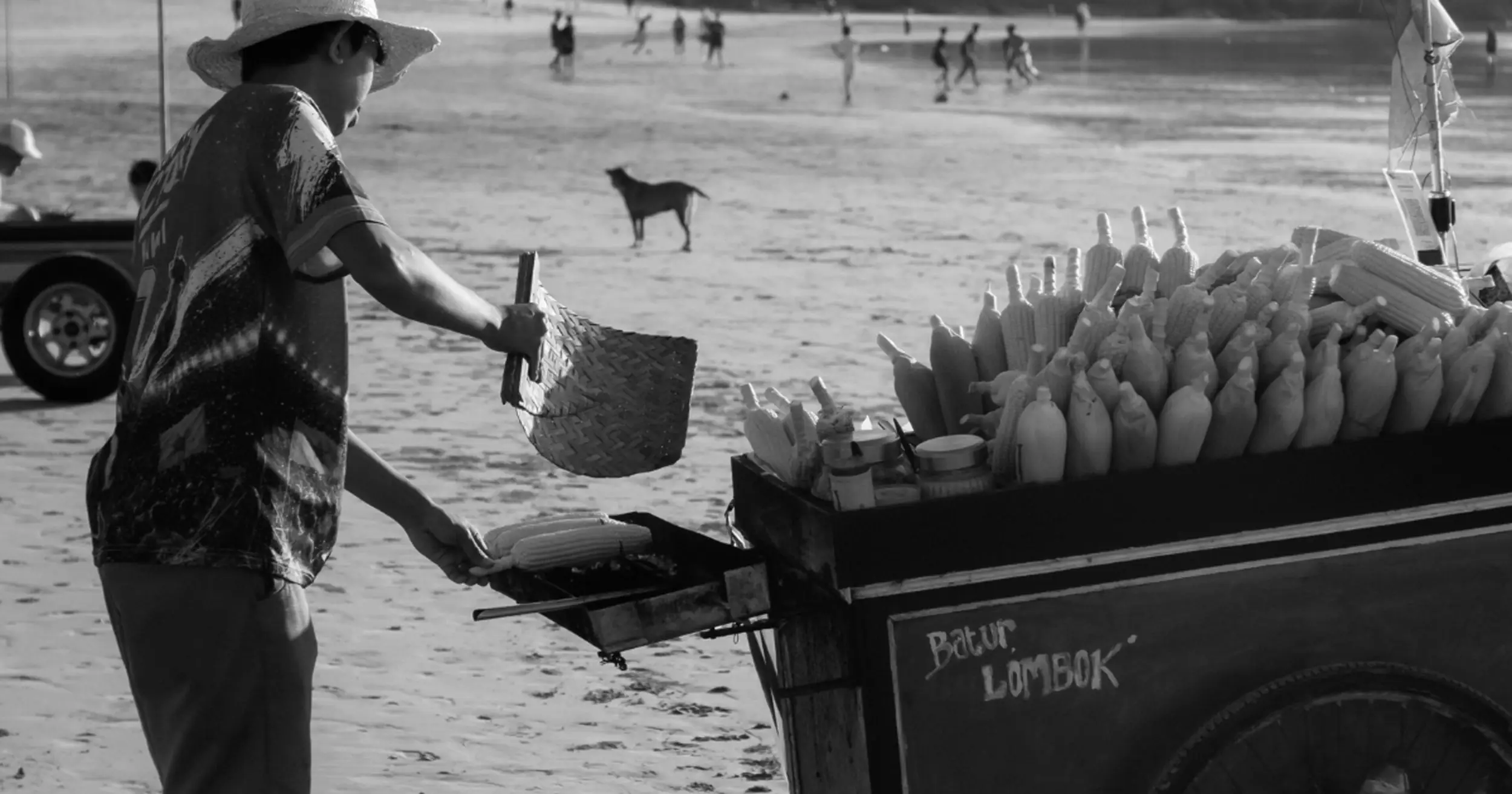
At the opposite, northern end, the fish market at Kedonganan is a busy early-morning sight, and we have written about it in our journal piece on Jimbaran Bay for the slow traveller.
A short drive away on Jalan Uluwatu II, the ceramic studio Jenggala Keramik opens its gallery and workshop to visitors, who can paint a mug, bowl or plate to be fired in its kilns. Firing takes five to seven days, so it suits a longer stay.
Jimbaran's main road is not made for long walks. The village is easier to enjoy in small pieces, such as the village crossroads, the southern end of the bay and the coves to the south, linked by a short ride or a walk along the sand.
South of Jimbaran the land rises into the Bukit Peninsula, where coves sit far below the cliffs. These beaches stay calmer than the well-known names mostly because they take effort to reach, so it helps to know what that effort involves.
Start with getting there. Ride-hailing drivers will usually drop you at a clifftop car park, but finding one for the trip back from more remote areas can be slow or impossible. For a day of coves and viewpoints, a car and driver for the whole day is simpler.
On the eastern side, in the village of Kutuh, Gunung Payung Beach lies below a clifftop temple of the same name. A few hundred steps lead down, and a shuttle from the car park saves you the climb. At low tide the reef is exposed, so check the tide table and plan a low-water visit as a walk rather than a swim.
Green Bowl, in Ungasan, means roughly three hundred steep steps, with macaques around the car park and the stairs. Keep bags closed. At the bottom are caves in the base of the cliff and a strip of sand about thirty to fifty metres long, which high tide can almost cover. So many lists mention it that it is small rather than secret. Go at low tide.
Further west, near Uluwatu, two long beaches take the most effort. Nyang Nyang stretches below the cliffs with no vendors on the sand, and the way down is long and steep. Nunggalan is reached by an unpaved path of twenty to thirty minutes, and the remains of a wooden shipwreck lie on its shore. Nunggalan has no facilities on the beach. Carry water, start back well before dusk and save both for a cool, dry morning.
All of these stairs deserve care. Bali's rainy season runs roughly from November to April, and the steps can turn slippery after rain; some descents have no continuous handrail. Wear shoes with good grip, take your time and pick a dry morning when you can. With small children, long steep climbs are hard work in the heat, and the sandy sweep of Jimbaran Bay is usually the easier choice.
Closer to home, Tegal Wangi is the cove that needs the most care. A sea temple stands on the clifftop above it. In August 2024, Jimbaran's village head said the beach was temporarily closed, citing the sanctity of the temple, private ownership of the cliff, high waves and a path without safety barriers. Confirm access locally before you visit; listings can disagree about whether it is open. The much-photographed "cave" is really an arch in the cliff. Ask locally first. If the way down is closed, take that as your answer.
Some places are simply too well known now to call hidden. Balangan's clifftop viewpoint draws day tours and wedding photographers, and Melasti is reached by a wide road cut through the cliff, with beach clubs along the sand. Both are lovely in their own way; they are just not quiet.
Midday on the Bukit is bright and hot, a good time to find some shade. In the planned resort area of Nusa Dua, Museum Pasifika has shown art from Asia and the Pacific since it opened in 2006. Its official website lists opening hours of 10.00 to 18.00. It is a well-established museum rather than a discovery, and a cool place to spend the hottest hours; check the opening times on the day.
To the north, in South Denpasar, the Tahura Ngurah Rai mangrove forest is Bali's only forest park. It opened to tourists in 2010, and boardwalks lead through the mangroves. Confirm opening hours before you go.
The south cannot offer every kind of quiet. If you are picturing cool air, rice valleys and long views without a car park in sight, look north and east. Munduk sits in the northern highlands, where travellers go for cooler mornings and forest waterfalls. Sidemen, a valley in East Bali, appears on several lists of the island's quieter places. Amed, on the eastern shore, is sometimes suggested for a calmer stretch of coast.
A note on those rice fields. UNESCO listed the cultural landscape of Bali's subak, the traditional water and farming system, in 2012, and the listing covers specific areas. Many beautiful fields sit outside it. Every one of them is a working farm, so keep to the paths and ask before walking through.
We know these places less well than our own coast, so treat them as directions rather than an itinerary, and check access and conditions locally. Each is a long drive from the south, so plan two or three nights rather than a day trip.
Your idea of quiet decides the base. For empty hills and cool mornings, spend at least part of the trip in Munduk, in Sidemen or near Amed, and give each place two or three nights so the journey is not the whole experience. For calm evenings, a working beach and the airport close by, Jimbaran suits that kind of quiet well. It is relaxed and family-friendly, and its evenings tend to gather around dinner on the sand rather than late nights out.
You can also split your stay. Arrive and leave through the south, and give the middle of the trip to the hills. In Jimbaran, the pleasures are small and close at hand, from a walk to the water to dinner as the light fades and the village temple on an ordinary morning.
A few minutes of checking will shape a calm day more than any list. Tide tables matter on the Bukit, because the same cove can be a wide beach at breakfast and mostly rock and sea by lunch. BMKG, Indonesia's weather agency, publishes marine wave warnings for Bali's waters, and they are worth reading before any cliff descent; they cover whole sea areas, not single beaches, so local advice still counts. Balinese ceremony days can close roads and fill temples, which is lovely to see from a respectful distance and a good reason to keep plans flexible. If stairs are hard for you, the village temple and its morning market, the southern end of the bay and Museum Pasifika make a far gentler morning than any cove. Carry small notes in rupiah, because market stalls, village car parks and gate booths commonly work in cash, and there may be no ATM nearby.
Check the calendar for Nyepi, the Balinese Day of Silence. For 24 hours the whole island pauses. Beaches, roads and attractions close, visitors stay within their accommodation, and the airport stops for the day too. The date moves each year, so look it up before you plan.
One more thing before you fly. The Bali Provincial Government charges foreign tourists a levy of IDR 150,000 per person, paid before or during the stay through the official Love Bali website. It is separate from any visa fee. Rules can change, so check the official site close to your travel date.
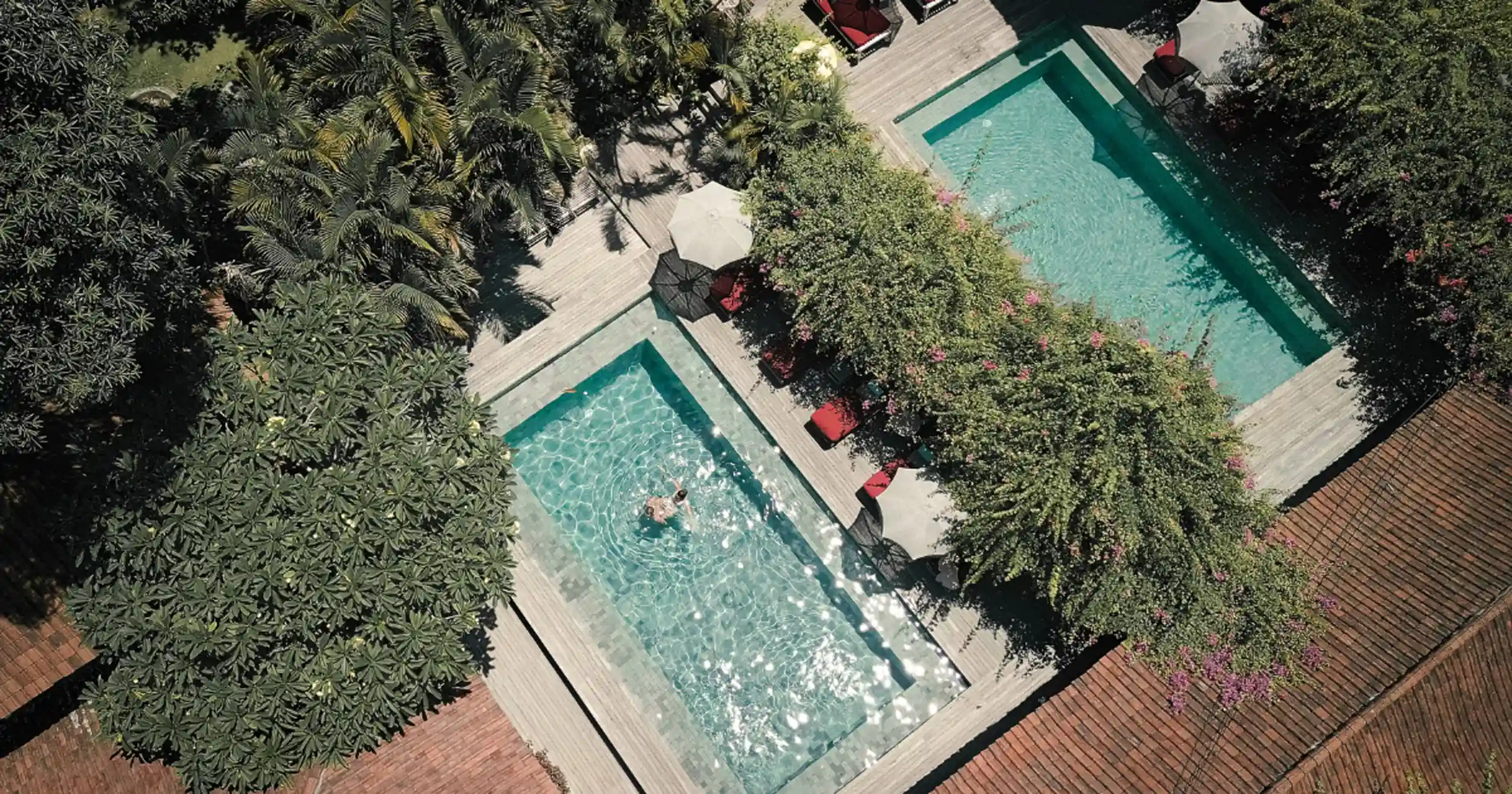
After a morning on the cliffs, a garden is a gentle place to come back to. Balquisse Heritage Hotel keeps 21 individually designed rooms, with four pools spread through the gardens. Inside, the rooms show the collector's eye of Zohra Boukhari, the designer who shaped the property. Saybah Restaurant serves meals in the gardens. The Shaba Spa offers Balinese massage after a long walk, and a bonfire is lit each evening.
Jimbaran Beach is about 400 metres away, and a vintage Volkswagen or Jeep shuttle takes guests to the sand and back. If you have questions about a few gentle mornings around the island, just write to our team.