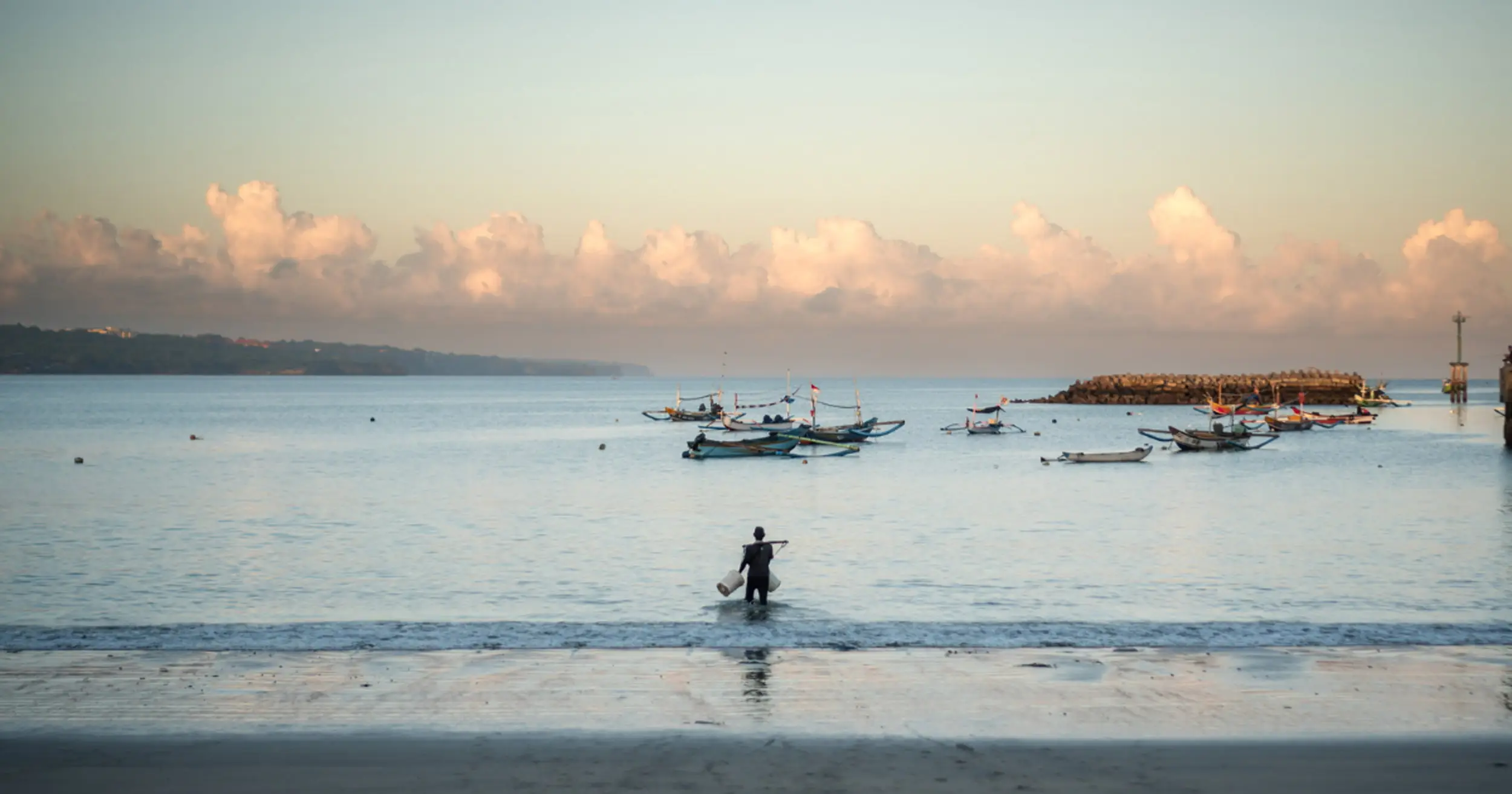

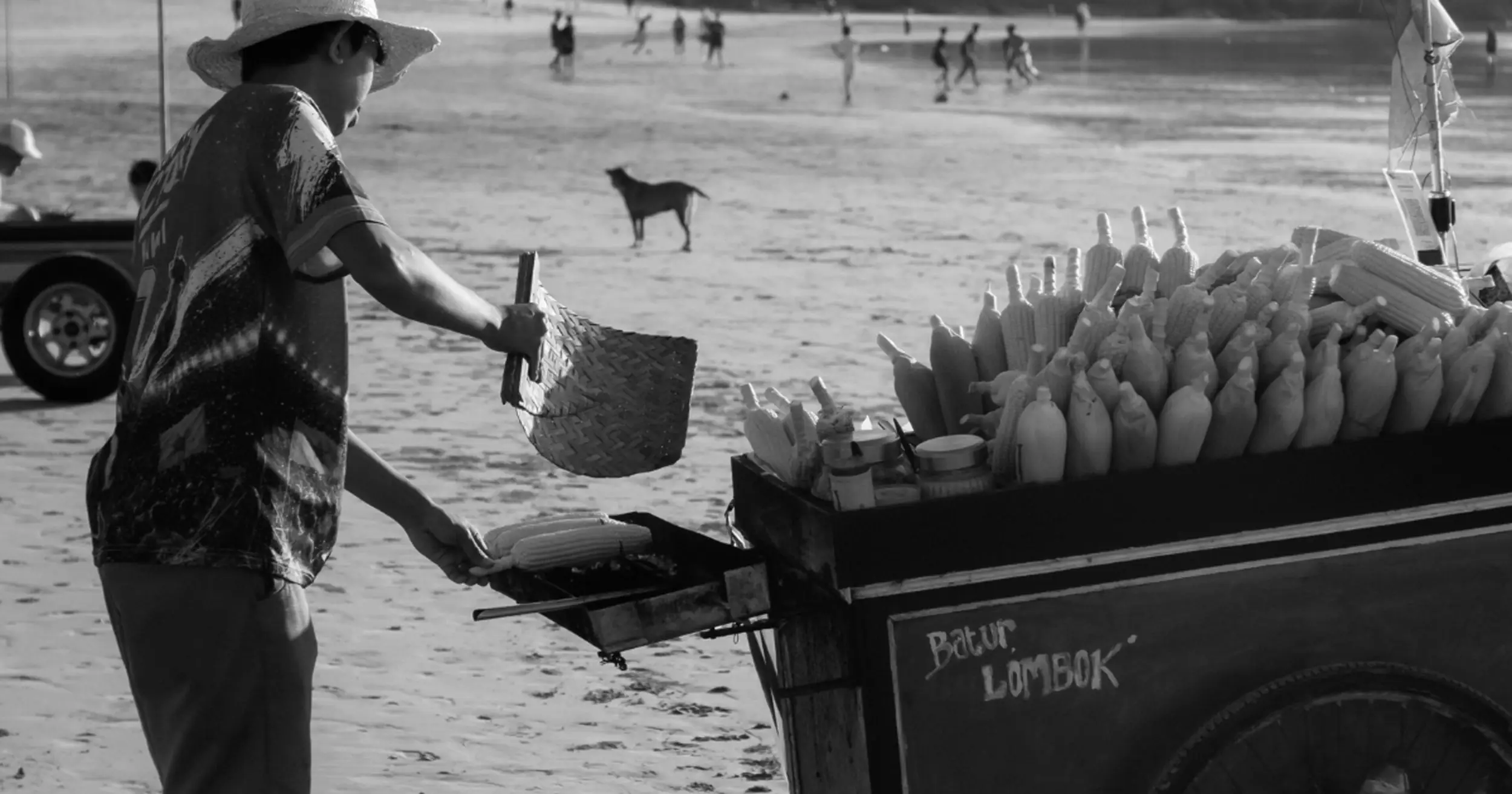
Jimbaran Bali is known for its west-facing bay, where seafood is grilled on the sand at sunset and painted jukung boats rest above the tideline. A fishing village and a resort bay at once, it sits on the narrow neck of land just south of the airport, with its fish market at the bay's northern tip, in neighbouring Kedonganan.
Many visitors first meet Jimbaran as an evening stop, a seafood dinner at the end of a day spent along the southern coast. Does it deserve more? That is a fair question. "Detour" is hardly the right word, though, for a bay that lies so close to where most travellers land.
We are Balquisse Heritage Hotel, a hotel in Jimbaran ourselves, a fact worth stating up front.
Look at a map of southern Bali and the shape explains a great deal. Jimbaran occupies the slender strip of land that joins the main body of the island to the Bukit Peninsula, and it belongs to the South Kuta district of Badung regency. Just to the north lies the airport, its runway visible from the northern end of the sand. To the south, the land climbs towards the Bukit, where larger resorts look out over the coast from the hills.
That position shapes how people use the place. For many travellers Jimbaran is not off the route at all; it is on the way in and on the way out. That makes it a practical last night before an early departure, although journey times depend on exactly where you stay and on the traffic, so it is sensible to check the route the day before.
Before it was a dining room, the bay was a place of work, and in many ways it still is. Many boats fish through the night and come in around dawn. Some of the catch is sold at the fish market on the bay's northern tip, and some goes to the kitchens along the beach.
That fish market stands in Kedonganan, a separate village in the neighbouring Kuta district, while Jimbaran itself lies in South Kuta. For the market itself, our earlier journal piece on a slower few days around the bay begins there.
In 2007 the customary village of Kedonganan, with the support of the Badung regency government, began organising its stretch of beach. The cafés along that stretch were later handed to the village's banjar, its customary neighbourhood associations, to run. Those tables on the sand began as a community effort, not only a view.
By late afternoon the same sand changes character. Tables appear in several clusters along the bay, down to Muaya at the southern end, and dinner is timed to the light. Nobody can promise a perfect sunset, of course. Weather decides. On a cloudy evening the bay is simply a calm place to eat well by the water.
Walk inland and Jimbaran becomes a village with its own rhythm, one that has little to do with dinner tables. Pura Ulun Siwi, the temple at the village's heart, faces east, which is unusual among Balinese temples. Opposite it stands Jimbaran's own morning market, a different market entirely from the fish market on the beach. Treat it as a temple first and a sight second, so dress modestly and step back when a ceremony is under way.
Further up the hill, Udayana University has its main campus at Bukit Jimbaran. That alone tells you something. This is a place where people study, work and raise families, not only one where they holiday.
The hills towards the Bukit hold several of the island's larger resorts, and Garuda Wisnu Kencana Cultural Park stands nearby in Ungasan, just beyond Jimbaran itself, if you would like an afternoon of art and landscape away from the sea. Each of these layers sits close to the others. Within a short distance you can move from a temple courtyard to a university road to a fishing beach, and that mixture is a large part of the character of the place.
The bay is sheltered by reef, and its water is generally gentler than at Kuta and the surf beaches further north. Conditions still change with the tide and the swell, so the sensible course is to look at the water on the day and ask locally before you swim.
Surfing is not the main reason to come. Beginners are better served by the beach break, which tends to close out, while the reef breaks off the airport are reached by boat and mostly suit intermediate and advanced surfers. A local surf school is the right place to ask about the day's conditions.
An honest portrait needs a few notes that the sunset photographs tend to skip.
In the rainy season, the tides carry driftwood and plastic onto the beaches at Jimbaran and Kedonganan, usually from around mid-December, in some years from late November, until March or April. Government teams, local residents and NGO teams are usually out early, and the sand is often clear again by late morning. Call it gotong royong, the Indonesian habit of shared effort, and few visitors are up early enough to see it.
Aircraft rise and descend over the northern end of the bay, close enough to watch from the sand. For some people they become part of the evening view, a reminder of how near the rest of the world feels from here.
After dark, most of the life of the bay settles around the dinner table, and nights here tend to end early. If you can choose your dates, the drier middle of the year is the easiest time for long days on the beach, and holiday periods bring more people to the tables.
For the right trip, yes. And for more than one evening. It rewards travellers who like a bay that still works for a living, a village with its own temple and market, early nights after a long dinner, and an airport close at hand. Stay a night or two and you see the morning side of the place, the boats coming in and the market at its busiest, which the dinner tours never reach.
Other parts of Bali do other things beautifully. Seminyak has its restaurants and shops, Canggu its surf and cafés, Ubud its terraces and temples, and Uluwatu its cliffs and reef breaks. A trip built around those may only want Jimbaran for a single evening on the sand, and that is a perfectly good way to know it.
If Jimbaran Bali suits the holiday you have in mind, the next question is where in it to stay. Our guide to the bay, the village streets or the hills sets out how each setting shapes a stay.
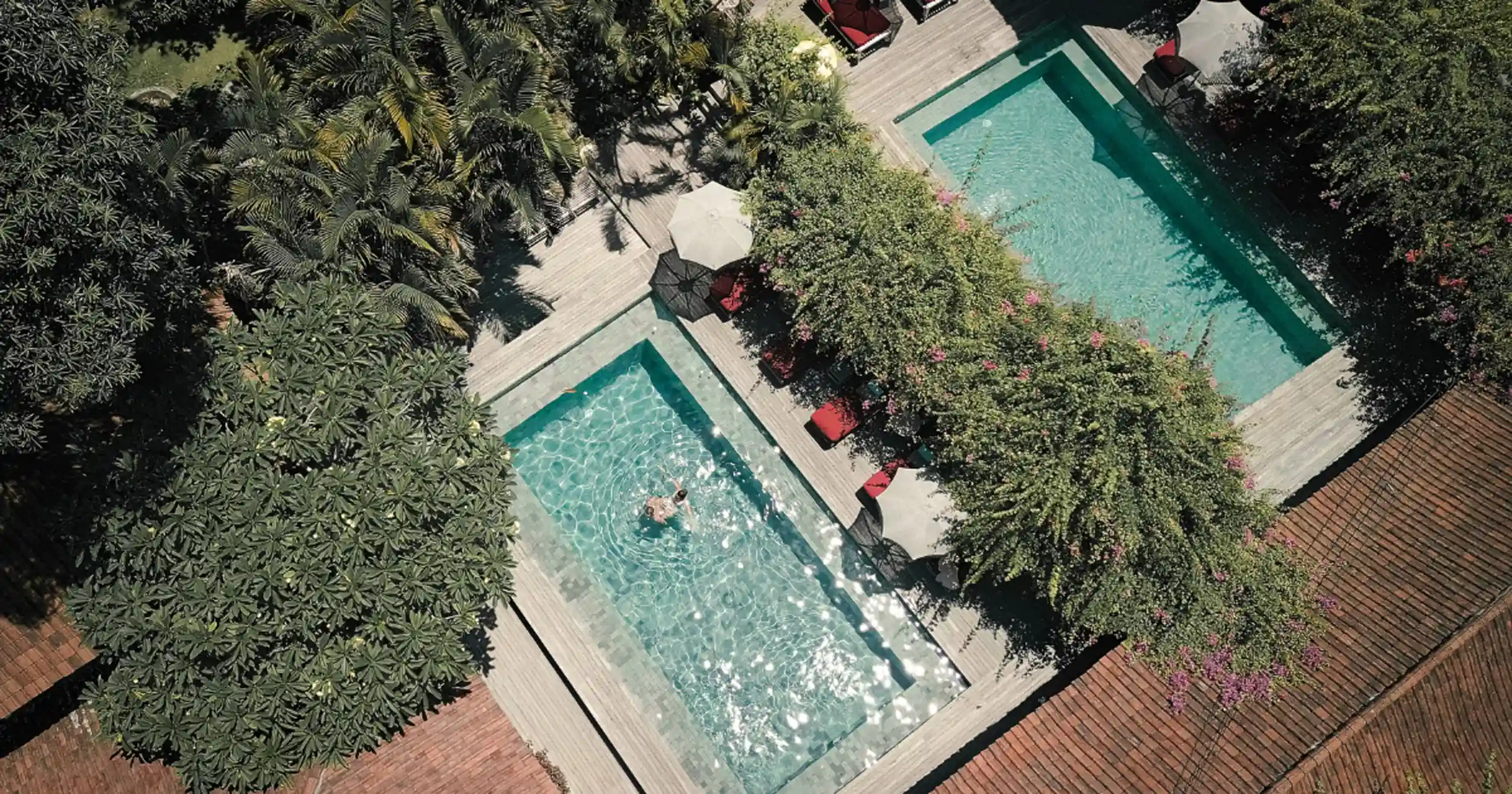
Jimbaran is our home. Balquisse Heritage Hotel began as a family house, opened its doors as a guesthouse with four rooms in 1998 and had grown to six by 2002. Today there are 21 individually designed rooms set among gardens and four pools. Zohra Boukhari, our founder and designer, shaped the interiors, and her collected eye brings carved timber, antique pieces and traditional Javanese gladak teak houses into the grounds. The teak houses come from Java, and we are glad to tell their story as part of Indonesia's wider heritage rather than Jimbaran's own.
We sit on Jalan Uluwatu, about 400 metres from Jimbaran Beach, near the sand rather than on it. The gardens are home to Saybah Restaurant, and The Shaba Spa offers Balinese treatments. On a grey day in the rainy season, the pools, the spa and the restaurant make a full and pleasant day away from the beach.
If you have questions about your own days in Jimbaran, our team would be delighted to hear from you.