
A couples retreat in Bali can mean a romantic stay with a massage for two, a structured wellness programme with a set timetable, or a guided workshop on the relationship itself. Choosing well begins with knowing which of these you want, and how much of each day you would like someone else to plan.
We write from Jimbaran, where Balquisse Heritage Hotel sits among gardens about 400 metres from the beach. That is our point of view. Read what follows as a neighbour's guide rather than a neutral ranking, one that also says plainly when a programme elsewhere on the island may suit you better.
Different operators use the word retreat for quite different things. In Bali it can describe almost any few days set aside for two, so it helps to know the main types.
Simplest of all is a romantic package at a hotel or eco-resort. A few nights come with a couples massage, perhaps a blessing ceremony, a yoga class and a dinner for two, and the rest of the time is yours. In practice, this is close to an ordinary stay with a few thoughtful extras.
Next comes the resort wellness programme. Here the schedule is the point. Mornings may start with movement, meals may follow a set menu, and treatments are planned across the week. Some programmes are built for two, while others are designed for individuals and simply welcome couples who book together.
Then there are retreats that focus on the relationship itself. These usually involve guided conversations, sometimes with other couples in a small group, and they ask more of you emotionally than a spa afternoon. If coaching is part of the offer, ask who leads it and what training they hold. Relationship coaching is not the same as care from a licensed therapist. If you are working through serious difficulties, a qualified couples therapist at home is the right first step, and a trip to Bali can follow as time to rest together.
Group yoga retreats are a fourth type. Many accept couples, and some are sold as couples retreats, yet they may also welcome solo travellers, so classes, meals and group sessions can be shared with people travelling alone. If privacy matters to you, ask whether the programme is couples-only or private to the two of you. None of these formats is better than another. They are simply different things to buy, and the first decision is which one fits the trip you have in mind.
Consider how many nights you want to set aside. A shorter stay is not a lesser one. It usually means fewer scheduled sessions and more free time.
Prices are harder to compare than they look, because operators quote them in different ways. Ask whether the price covers one person or both of you, whether the room is shared or private, and which currency applies.
Compare the same number of nights and the same room arrangement, then look at meals and treatments. A lower headline figure tells you little until you know what it covers.
The small print matters as much as the number. Ask about deposits, refunds and any limits or surcharges on transfers. When a quote arrives, check whether tax and service are already included, then ask for one written total for both of you, with meals, transfers and any optional treatments spelled out. Foreign tourists visiting Bali also pay a provincial tourist levy of IDR 150,000 per person, once per trip, which can be paid through the official Love Bali portal.
Before you pay, it is worth checking that a retreat is well run. Look for a named team, a written itinerary and clear terms on the deposit and cancellation, then read recent independent reviews. Booking directly, or confirming a marketplace booking with the property itself, helps avoid simple mix-ups, such as a room reserved for one guest instead of two.
A well-chosen retreat gives you time together. Time to sleep without an alarm, to share a meal without phones on the table, to try something new side by side. For many couples, that is reason enough to travel.
What a retreat cannot do is promise an outcome. A timetable of activities is not a guarantee of a change in your relationship. Be wary of any page that suggests otherwise.
It pays to look closely at the timetable too. One traveller comparing Bali yoga retreats asked whether daily meditation was really included. It is a fair question. Guided sessions can fill fewer hours than the length of a package suggests, so ask for a sample day before you commit and check which parts are optional. Some programmes let partners follow separate paths, or let one skip a class while the other attends, but this differs from one operator to the next. Ask in writing, and ask whether anything is refunded if one of you sits a day out.
If one of you has never done yoga, that is rarely a problem. Many programmes say they welcome beginners, so ask how classes are pitched before you book. Anyone who is pregnant, recovering from an injury or managing a health condition should check with a doctor before joining physical classes.
Where couples should stay in Bali depends on what the days are for. Each part of the island has its own character, and each suits a different kind of retreat.
Ubud and the river valleys around it hold many of the island's structured residential programmes, with rice terraces, temples and village life close by. Canggu and Sanur add contemporary wellness studios and sea air, with options to consider for a planned stay. These are good places for a planned week.
The south of the island offers something different. Jimbaran, on the Bukit Peninsula, is a short drive from the airport, which suits shorter trips and easy arrivals after a long flight. It has no cluster of retreat centres in the way Ubud does. What it has is a working fishing bay, the Kedonganan fish market, seafood grilled on the sand and sunsets over the water, all close at hand for couples who would rather plan their own days.
If your trip is long enough, you do not have to choose just one. Splitting your nights between the valleys and the coast lets you pair a structured stretch with a freer one, and see two sides of Bali.
Can you plan a Bali wellness trip without a fixed retreat programme? Yes, and for some couples it is the better fit. A hotel stay can include the same things as a retreat, from massage and yoga to a purification ceremony. What differs is who sets the timetable.
Start with the right base. Choose somewhere with a spa, a place to practise yoga and a garden or pool where you can spend a quiet afternoon, so most of what you want is a short walk away. Book treatments ahead for the days you know you will want them, then leave whole afternoons free. One cultural experience, chosen with care and arranged by people who know its customs, often means more than three squeezed into one day.
This approach also leaves room for difference. One of you may want yoga at sunrise while the other prefers a long breakfast and a book. With no group schedule to follow, neither of you has to compromise.
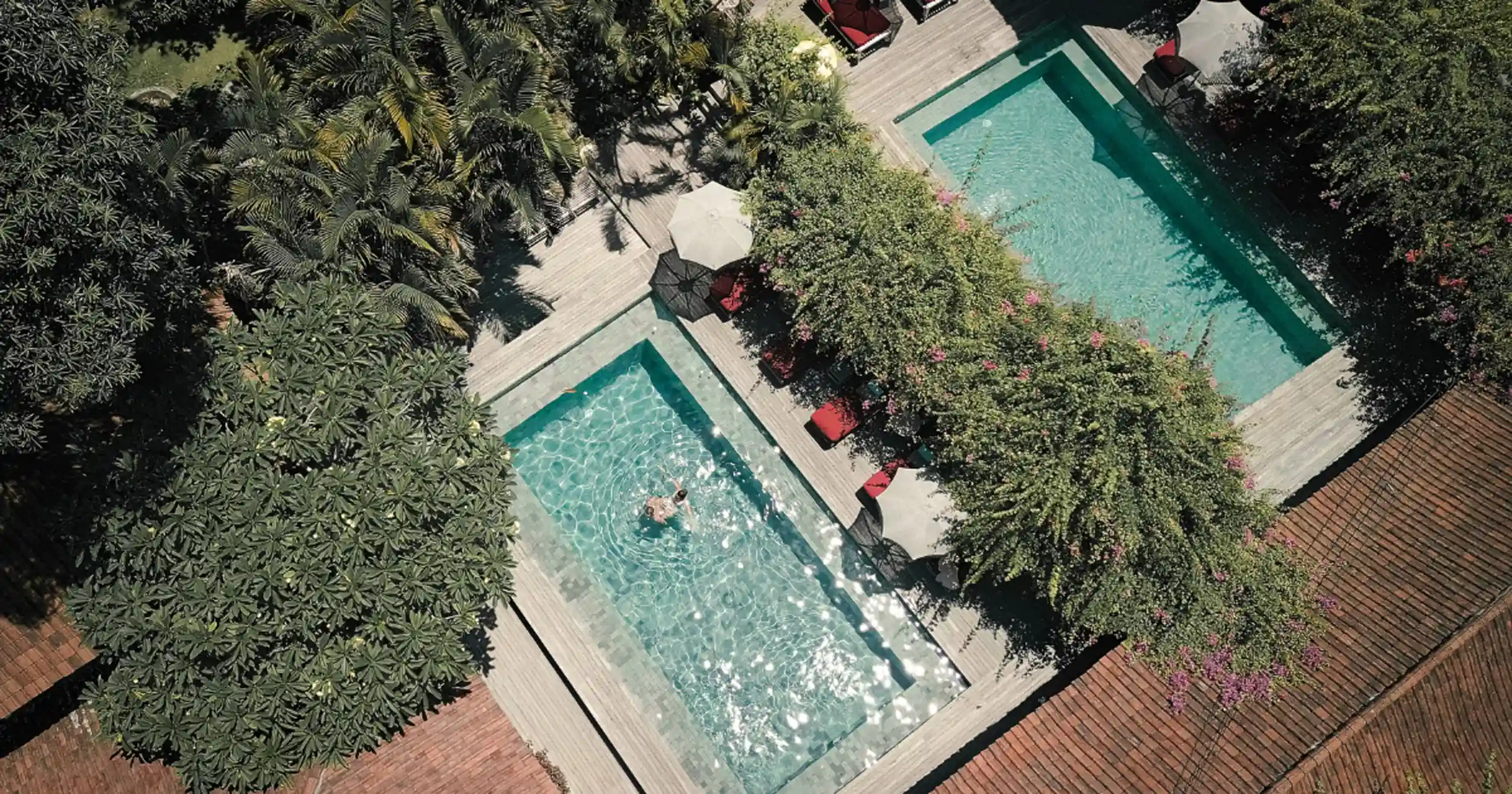
For couples who like that freedom, Balquisse Heritage Hotel offers an intimate setting. Its 21 individually designed rooms sit among frangipani, carved timber and sunlit verandas. Across the garden are four pools, Matahari Pool, Shaba Pool, the Sacred Pool and Sampuran Pool, which the hotel associates with the Melukat water purification ritual. If Melukat interests you, ask our team before you arrive whether it can be arranged, and about the timing and customs that go with it, including what to wear.
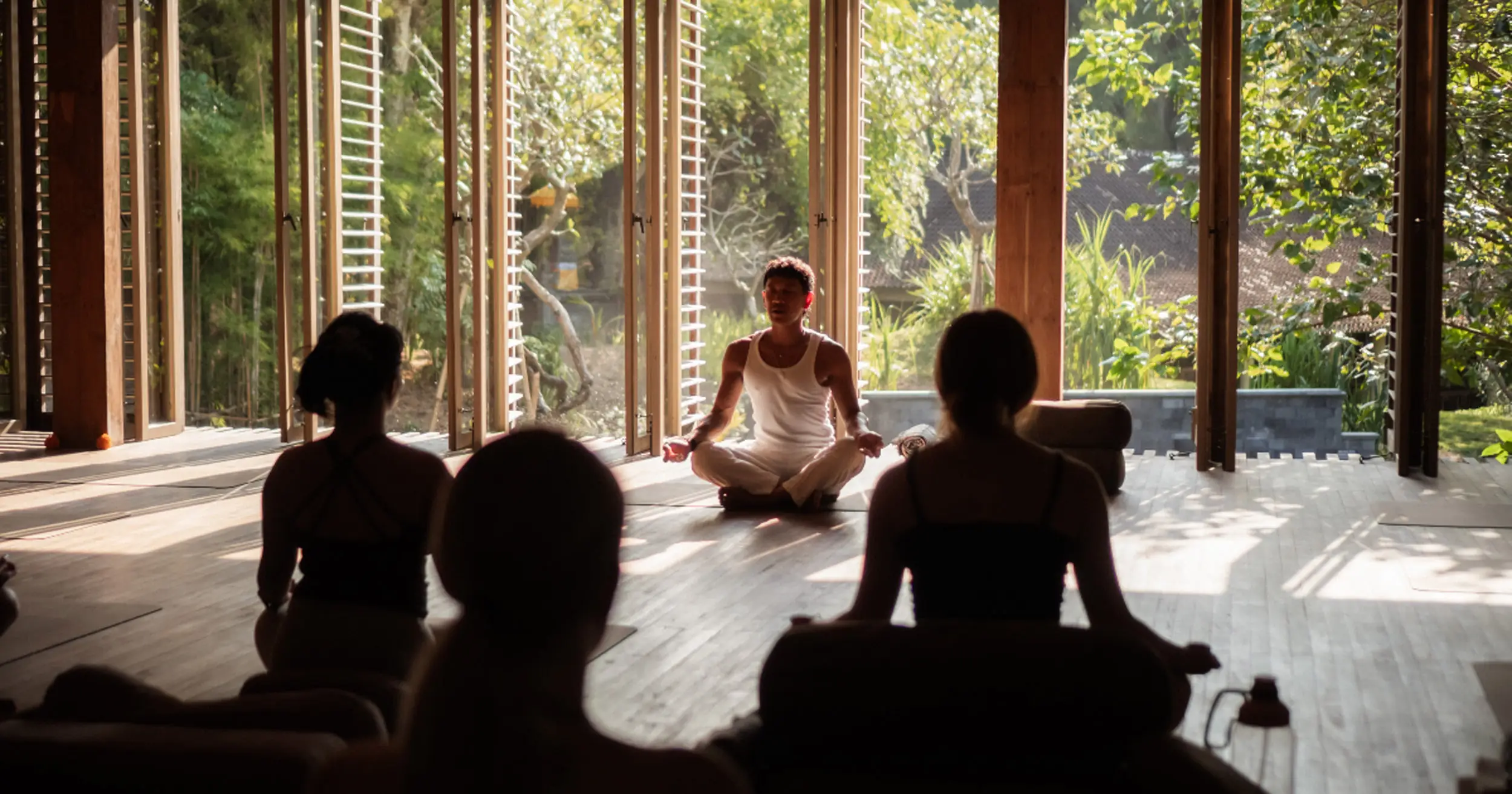
Here, wellness can follow your own rhythm. The Shaba Spa offers massage and spa treatments, while The Shaba Shala holds yoga classes and is home to the Campuhan Retreat. A bonfire is lit each evening, and Saybah Restaurant serves its meals in the gardens.
The interiors reflect the collected eye of founder and interior designer Zohra Boukhari, who brought together heritage architecture and handwoven textiles in a family home that slowly grew into a hotel. Among the room categories is the Vintage Teak House. Jimbaran Beach is an easy walk away, or a short ride in the hotel's vintage shuttle.
If you would like to shape a stay around massage, yoga and quiet hours in the garden, the team is glad to help.