
Good wedding guest accommodation in Bali begins with the venue, not with a list of hotels. Keep guests close to where you marry, gather them in as few addresses as you can, and arrange how they reach the celebration and return from it; get those three things right and the rest of the weekend tends to follow.
We write from Balquisse Heritage Hotel, a garden hotel of 21 rooms in Jimbaran, so we have an obvious interest in where your guests stay. For the wider picture, from legal steps to the seasons, our wedding planning guide covers the ground. Here we stay with the guests. Guests rarely land on the same flight. They rarely stay the same number of nights, either. The way you house them is, quite simply, the way you hold the group together.
It sounds like logistics, and partly it is. Yet where people sleep decides a surprising amount of what happens, including who shares breakfast on the morning of the wedding, who catches the first shuttle and who waits for the last, and whether an aunt arriving a day late finds her way to the welcome dinner or spends the evening on her own.
How many guests can a small wedding venue in Bali host? There is rarely a single answer, because a small venue has two capacities. One is how many people may attend the celebration, which depends on the space, the layout and the venue's permissions for events. The other is how many can stay the night, which depends on its rooms. The first can be larger than the second, and guests beyond the rooms sleep nearby. Ask for both figures in writing.
The gap between them matters more than it first appears. A garden can seat far more people than its bedrooms can sleep. Even a lawn that looks generous on a site visit may come with conditions that are easy to miss, such as an hour by which amplified music should stop, rules about outside caterers or musicians, or limits on what can be set up and where. Booking every room in a property is not the same as permission to hold a wedding there. Those are separate conversations, and each deserves its own answer.
At Balquisse Heritage Hotel, garden weddings and celebrations are arranged with our team, in the gardens themselves or in The Shaba Function House, and the team can talk through guest numbers, settings and availability for your dates. Rooms are the simpler figure. There are 21 of them, and how many of your guests they can welcome depends on your dates and on which rooms remain open.
A guest list is not a room list. Couples share, friends sometimes do, and some guests travel alone and will want a room of their own. Families may need space for children; an older relative may need a room without steps. A long list of names can turn into a surprisingly short list of rooms, or a surprisingly long one.
Nights matter as much as rooms. Some guests will fly in for a couple of nights and leave the morning after the wedding, while others will turn the occasion into a fortnight on the island. Thinking in room-nights, one room for one night, gives a truer picture of what you need and when. Started early, a simple shared list does most of the work. It records each guest, the nights they plan to stay, the kind of room they need, and anything that would make their stay easier, such as step-free access or a cot.
That list also brings an early question to the surface. Who pays? There is no fixed rule for weddings in Bali. Some couples hold rooms at an agreed rate and leave guests to book and pay for their own. Others cover everyone. And some settle somewhere between, taking care of parents or the wedding party while offering everyone else a clear choice. Whichever you decide, say so plainly and early, and offer more than one price point where you can, because the journey itself is already a generous gift of time and money from the people you invite.
There are a few ways to keep a group near the celebration, and most weddings use more than one. The first is to take a whole property for the people closest to you, so the couple, parents and wedding party wake up in the same gardens. The second is to hold a group of rooms at a hotel near the venue, which guests then book for themselves. A third combines the two, with the inner circle under one roof and everyone else a short distance away. Some couples simply share a few suggestions and let guests book wherever they like. That offers more choice, but it tends to scatter people across the island and makes pick-ups harder to plan.
If you hold rooms, read the terms before you sign. Two phrases come up again and again. A release date, also called a cut-off date, is the day on which any held rooms that guests have not yet booked go back on general sale. An attrition clause commits you to filling a minimum share of those rooms, and to paying for the shortfall if too few are taken. Some arrangements carry no such promise and simply release the rooms; others ask for a firm commitment in return for rooms that are guaranteed. Neither is wrong. Where it matters is when numbers change, and numbers usually do.
Ask, too, whether the agreed rate holds for guests who arrive a few days early or stay on afterwards. Many will want to, and it is far easier to settle at the start than room by room later. Compare the group rate with what the hotel shows everyone else for the same room on the same dates, so the arrangement genuinely helps your guests. And watch for the two small plus signs. Quotes in Bali are often written with "++", which means tax and service will be added to the figure shown. Before you share any rate, ask for the final amount per room per night, so nobody meets a different number at checkout.
Closeness is worth the effort. When guests sleep near the celebration, the weekend becomes something they share, with a swim before the ceremony, a long breakfast the morning after and an afternoon with the island rather than an afternoon crossing it.
In a hotel where no two rooms are alike, who sleeps where becomes a quiet act of hosting. Parents and grandparents may be happiest near level garden paths. Families tend to need room to spread out. Light sleepers will thank you for a room away from wherever the group gathers in the evening, while the friends who plan to be last to leave may prefer to be close to it. If guests are paying for their own rooms, describe the differences openly, in size, outlook and layout, so everyone chooses with the same information.
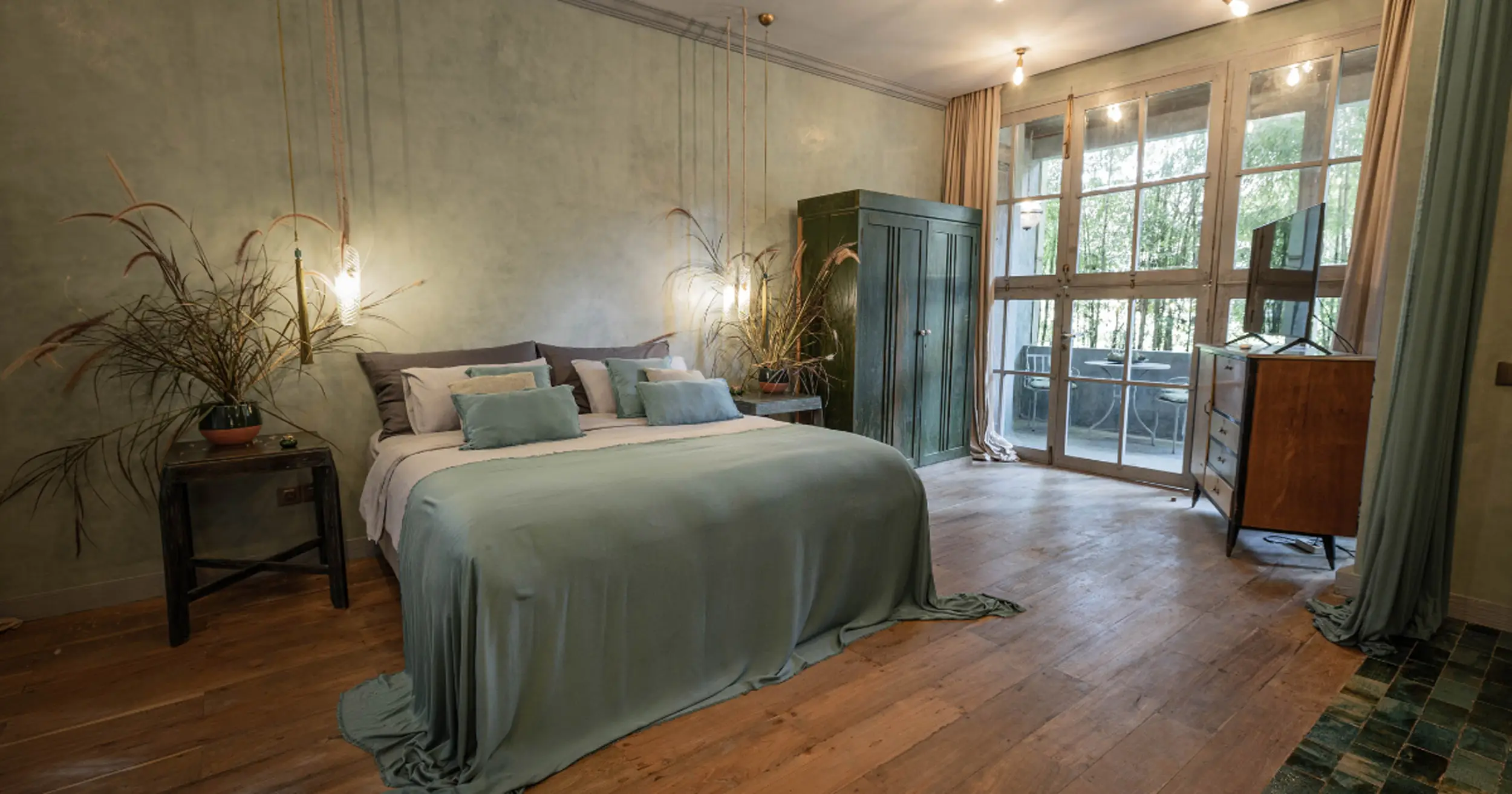
Balquisse Heritage Hotel has 21 individually designed rooms, and the differences between them are part of their character. Two are Vintage Teak Houses, Sangon and Sangitani, a pair of traditional gladak teak houses from Java, relocated and reassembled here. There is a Family Garden Room for those travelling with children. Each of the others has its own setting among the gardens. Our team would be delighted to talk through which rooms are available for your dates, and how they might suit the people you are inviting.
On the wedding day itself, transport is part of the welcome. Consider arranging shuttles from a small number of named pick-up points, such as the hotels where guests are staying, rather than asking everyone to find their own way. Choose vehicles that suit the roads to the venue. Some venues are reached by narrow lanes where a minibus is welcome and a large coach is not, so agree the drop-off point with the venue well in advance.
Plan the return as carefully as the arrival. Running the journeys home in waves lets grandparents and young families leave when they are ready, while others stay for the last dance. Tie the final departure to the hour at which the venue's music ends, and ask for that hour in writing; many venues in residential areas set one out of consideration for their neighbours, and it shapes how the evening closes.
Some venues will also mention a banjar contribution. The banjar is the local community council at the heart of village life, and a contribution for an event is common practice, and at some venues a requirement; it can cover practical help such as parking and security. It is settled through the venue or your planner, and some venues already fold it into their wedding packages. Ask about it early, so it sits in the plan from the start.
Then look at the Balinese calendar as well as your own. Temple ceremonies and processions can close roads for a time. On Nyepi, the Day of Silence, the island pauses. The airport closes for 24 hours and everyone stays within their accommodation. The date changes each year, so check the calendar before planning arrivals and departures. On the evening before, ogoh-ogoh parades fill the streets. Check for other public holidays around your wedding dates too.
Good guest information arrives in stages, each one answering the question guests are asking at that moment. First comes the place and the dates, with the area named clearly, so nobody books a room on the far side of the island by mistake. Next comes the accommodation, with where you have held rooms, how to book them and the date by which guests should book. Then the practical notes for travel. Last of all, the final schedule, with pick-up points, timings and a name to call.
Guests flying in from abroad will appreciate two reminders in those travel notes. Bali requires international visitors to pay a foreign tourist levy of IDR 150,000 each, which can be settled in advance through the province's official Love Bali portal. Visa and entry rules depend on nationality and are revised from time to time, so point guests to Indonesia's official immigration website rather than repeating the details yourself. Finish with a copy of the weekend's schedule, easy to keep on a phone.
Many guests will also ask whether they should stay near the venue for their whole trip. For the nights around the wedding, it makes sense, because those are the nights the group shares. Before and after, the island is theirs, from the rice terraces inland to the beaches of the south. Suggest they plan those days separately. During the weekend itself, one messaging group for everyone keeps changes simple, whether it is a later pick-up, a moved breakfast or a gentle reminder about the dress code.
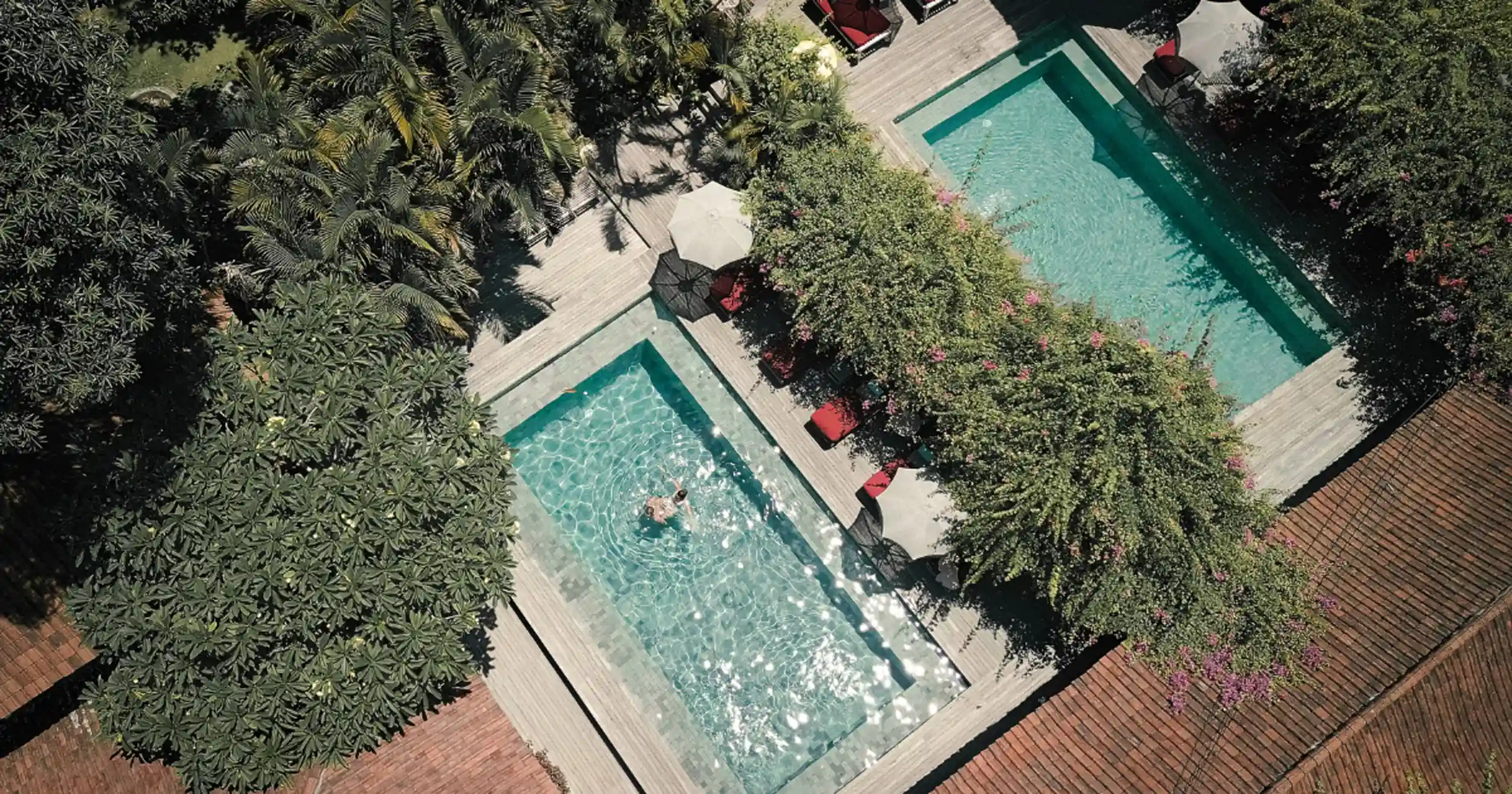
Jimbaran lends itself to this kind of weekend. Balquisse Heritage Hotel sits about 400 metres from Jimbaran Beach, where fishing boats rest on the sand and seafood is grilled by the water as evening falls. Guests who stay with us share the gardens, four pools, The Shaba Spa and Saybah Restaurant. A wedding here can unfold with the celebration in the gardens and your closest family and friends a short walk from their rooms. If that is the weekend you imagine, our team would be delighted to hear about it.